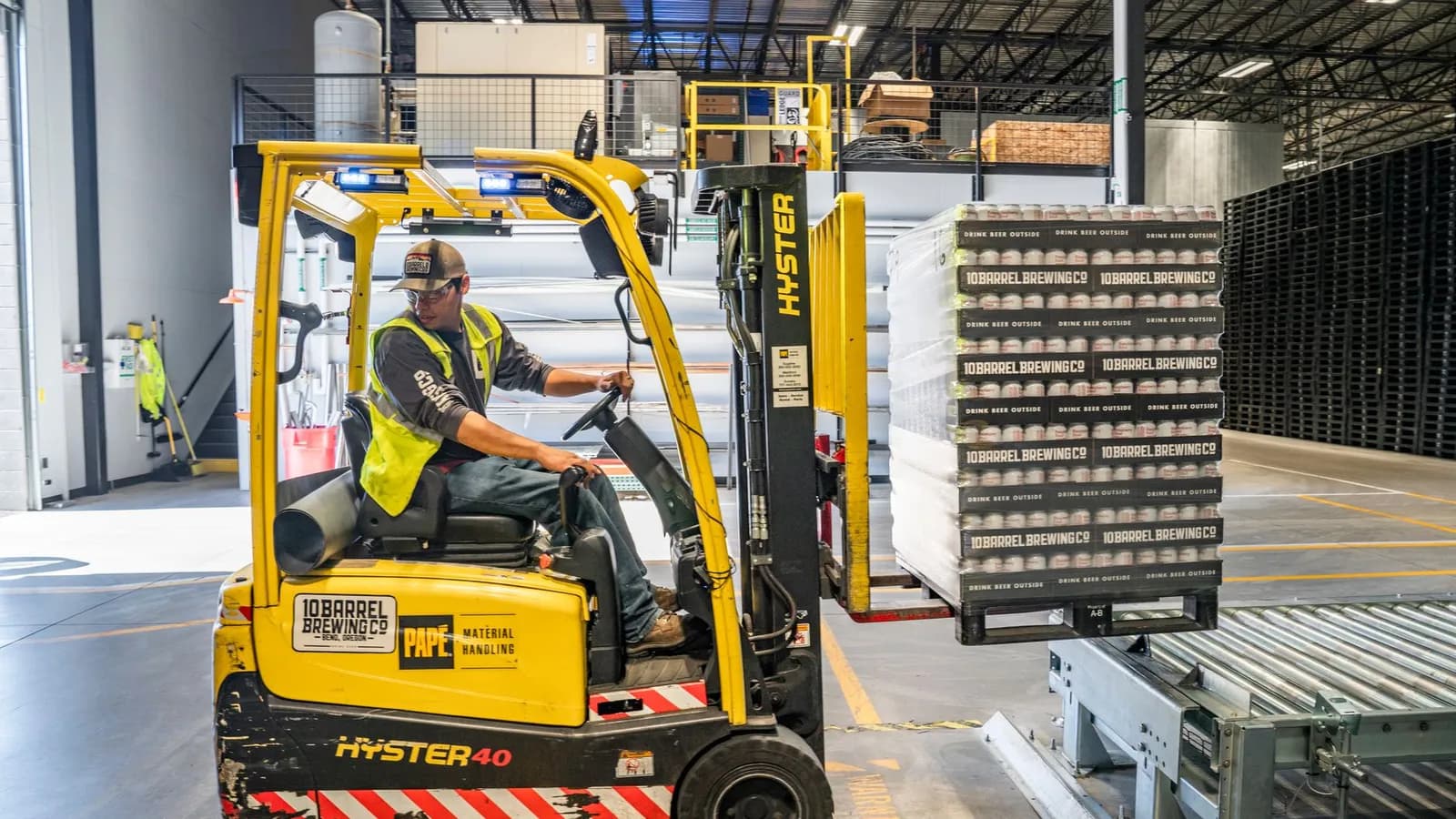
Food handling is not a sector apart: it is a demanding case of industrial logistics, where the same pallet flows meet stricter hygiene and cleanliness constraints. The question comes up often: which handling equipment should you choose for a food warehouse or a chilled storage area? The answer rests on a few simple principles, and it leans clearly toward electric.
In short: favor electric machines that run quietly and leave no marks, plus compact equipment (pallet trucks and stackers) that maneuvers in narrow aisles without damaging floors or contaminating products. Combustion engines, with their emissions and noise, have no place next to food. For everything else, standard warehouse logistics rules apply as they are, as we set out in our piece on handling in logistics and port environments.
Why electric is the right call near food
In an environment that stores and moves food products, the choice of power source is not neutral. A combustion engine releases exhaust and generates noise: two nuisances that do not sit well next to food or with operators working full shifts.
Electric answers these constraints directly:
- Zero emissions in use, so nothing is released near the stored products.
- Quiet operation, compatible with continuous activity and zones where staff work in contact with goods.
- Clean running, with no fuel to handle and none of the soiling risk tied to a combustion powertrain.
This is why a food-handling fleet is built around electric forklifts, pallet trucks, and stackers, rather than the diesel or LPG machines kept for outdoor use and rough site terrain.
Protecting floors: non-marking tires
The floors of a food warehouse, often smooth concrete or resin, are cleaned frequently and have to stay spotless. The wrong tire leaves black marks that are hard to remove and wears the surface faster.
Indoor electric machines are fitted with non-marking tires that protect these floors and keep cleaning simple. It is the same principle used for indoor aerial lifts, where protecting the slab comes first: we explain it in our article on the electric aerial lift inside a warehouse. Also check the bearing capacity and condition of the floor wherever loads travel and stand, especially around docks and storage rooms.
Washdown, cold rooms, and the stainless steel question
In production areas the machine gets cleaned as often as the floor, and that is where standard equipment ages fastest, because water and detergent work on fasteners, connectors and panels.
The word washdown actually covers two separate questions. Direct food contact and a high-pressure jet aimed at the machine itself call for fully stainless steel equipment, a distinct family that our catalogue does not cover, and it is better to say so before you make the trip. The working atmosphere is a different matter, because constant humidity, salts and detergent vapour attack equipment well beyond the washed zone itself. That is where Hangcha's anti-corrosion A version comes in, suitable for environments classified C5-I and C5-M, available on the XA electric pallet truck and the XA pedestrian stacker among others.
Cold imposes a further constraint, since batteries, hydraulics and electronics have to hold up inside the cold room and then survive the trips back out to the dock, where condensation forms on the way back. The same XA series exists in an F2 cold-store version, intended for use down to -30 °C.
One point is worth anticipating before you order: condensation. A machine moving between a freezer room and an ambient dock frosts up and then runs with water on every pass, because humid air condenses on cold metal. Either you dedicate a machine to the cold zone, or you allow drying time between cycles.
Operational hygiene itself belongs to your HACCP plan, not to the truck. What the equipment can do is avoid introducing a hazard of its own: no exhaust over the pallets, no hydraulic leak over a line.
Compact footprint and flow: pallet trucks and stackers
Food logistics moves large volumes of pallets through often tight spaces: narrow aisles, storage rooms, picking and dock areas. Compact equipment is decisive here.
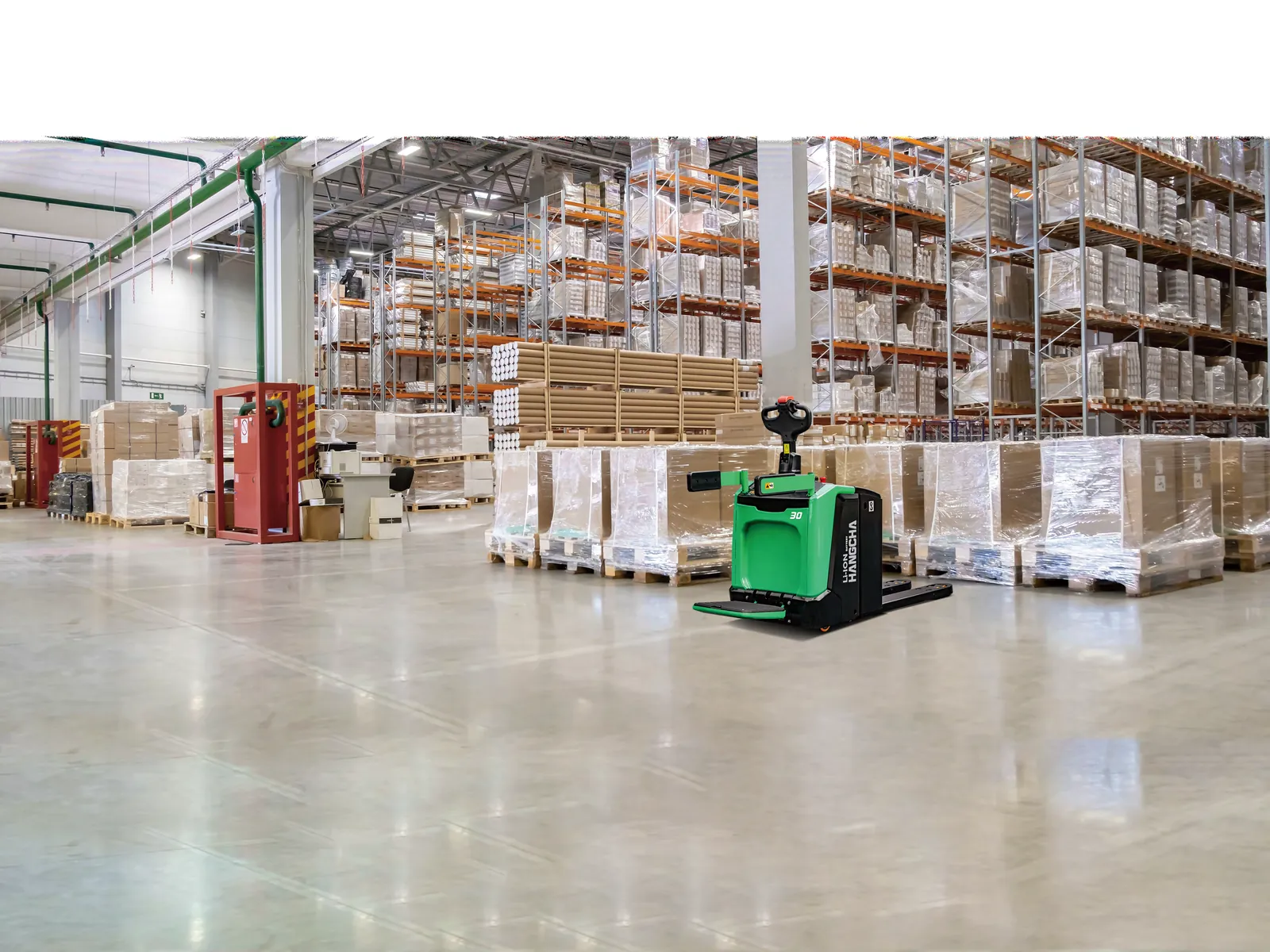
- The pallet truck handles horizontal pallet transfer, from the dock to storage and picking zones. Manual for short distances and occasional flows, electric as soon as throughput rises or trips get longer. To decide between the two, see our comparison of manual versus electric pallet trucks.
- The stacker, electric or semi-electric, takes over for putaway and stacking at height. Compact, it maneuvers where a conventional forklift would run out of room.
- Reach trucks and order pickers round out the setup for high storage and detailed picking, where storage density and throughput justify them.
The right sizing depends on your volumes, your rack height, and the real width of your aisles: these parameters, measured on site, set the suitable model.
Availability and continuity: maintenance and replacement
In a food supply chain, one machine out of service quickly blocks an entire flow. Controlling downtime therefore matters as much as the initial choice of equipment.
Preventive maintenance limits that risk: general overhauls, regulatory safety checks, and monitoring of batteries, chargers, and hydraulic circuits, with a detailed service report at every visit. The goal is simple: fewer breakdowns, and equipment that stays compliant and safe. If an incident occurs, after-sales service provides fast diagnosis, on-site intervention, and genuine guaranteed parts, with the priority of minimizing downtime.
For a seasonal need or an activity peak, flexible rental gives access to equipment available immediately, with maintenance included depending on the package and a replacement machine in case of breakdown, without tying up capital.
Tailoring the fleet to your site
No two food warehouses are exactly alike: volumes, storage heights, aisle width, flow intensity, and hygiene constraints vary from one site to the next. Rather than starting from a catalog, it is better to start from your real flows and work back to the equipment. Tell us your throughput, your rack height, the type of floor you have, and the expected duration of use: that information is usually enough to propose the right mix of pallet trucks, stackers, and electric forklifts the first time.
Frequently asked questions
Why avoid engine-driven equipment in food handling?
An engine-driven truck gives off exhaust fumes and noise, two nuisances incompatible with proximity to food products and operator comfort. Electric equipment answers with zero emissions, quiet operation, and clean use.
What equipment should a food warehouse favor?
Electric forklifts, pallet trucks, and stackers, fitted with non-marking tires to preserve smooth concrete or resin floors.
How do I choose between a manual and an electric pallet truck for food handling?
Manual suits short distances and occasional flows; electric becomes the right call once throughput rises or trips get longer.
What happens if a machine breaks down on a food-handling line?
After-sales service provides fast diagnosis, on-site intervention, and genuine guaranteed parts, with the priority of minimizing downtime on a flow that quickly blocks the whole chain.
Are there pallet trucks and stackers for cold storage?
Yes, Hangcha offers the XA series in an F2 cold-store version, intended for use down to -30 °C, and in an anti-corrosion A version suitable for environments classified C5-I and C5-M. For direct jet washing of the machine itself you need fully stainless steel equipment, which we do not carry.
Request a free assessment of your needs and we will size the right fleet for your food-handling environment together.