The pallet truck is the most common piece of handling equipment, and often the one people think about least. Yet the choice between the manual and the electric version changes the productivity of a dock, the fatigue of the crews, and, over time, workplace health. The right decision is not about budget alone: it depends on how the tool will actually be used. Distance travelled, frequency of moves, load weight, and the presence of ramps draw a clear line beyond which electric stops being a luxury and becomes a saving.
In short: for short moves, low frequency, and light loads, the manual pallet truck is more than enough. As soon as the runs get longer, the cadence climbs, the pallets turn heavy, or a ramp comes into play, electric becomes worth it because it protects both throughput and the operator. In between, ergonomics and daily volume tip the balance.
The manual pallet truck: simple and reliable
The manual pallet truck is unbeatable within its zone. It is simple, inexpensive, rugged, and asks for almost no maintenance. With no battery, it is always ready and imposes no charging logistics. For short moves, low frequency, and occasional handling, it does the job perfectly: unloading the odd truck, shifting a pallet a few metres, feeding a station now and then.
Its limit is physical. The operator supplies the pulling and lifting effort. On heavy loads, long distances, or intensive flows, fatigue builds up and output drops.
The electric pallet truck: powered traction and lift
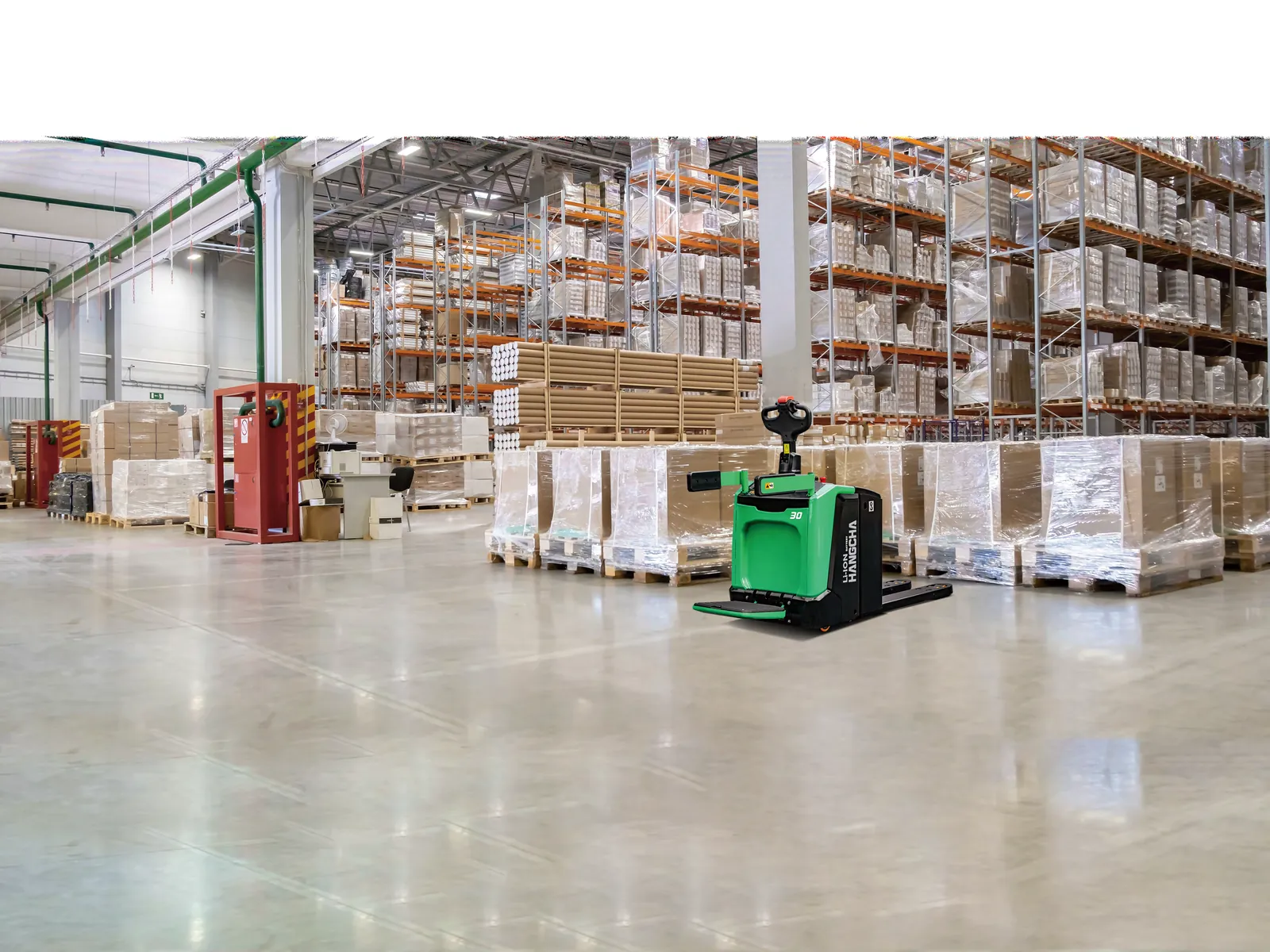
The electric pallet truck powers both traction and lifting. The operator guides the machine without pulling or pumping: less fatigue, less risk of musculoskeletal strain, and a higher travel speed on long runs and ramps. Throughput rises, and so does consistency, because performance no longer depends on how fresh the operator is at the end of the day.
In return, it costs more to buy, needs charging, and calls for a minimum of maintenance. It is an investment justified by use, not chosen by default.
The deciding variables
Four factors settle the choice, and they apply to all the gear in a small warehouse, as our guide to pallet trucks and stackers for a small warehouse sets out. Look at them together, not in isolation:
- Distance per move. The longer the run, the more the powered assist pays off.
- Number of moves per shift. A high cadence multiplies the manual effort and the strain on the operator.
- Load weight. Repeated heavy pallets make manual traction painful and slow.
- Ramps and inclines. A loaded ramp to climb is the case where electric changes everything, on both safety and effort.
Add ergonomics and prevention: on intensive flows, cutting the physical demand on crews carries a value that does not show up on the purchase invoice alone. If your loads go up as much as they move across, the question goes beyond the pallet truck: see when to favour a stacker over a forklift in a small warehouse.
A practical rule of thumb
Without replacing a proper workstation analysis, a simple rule points the way:
| Criterion | Manual pallet truck | Electric pallet truck | | --- | --- | --- | | Distance per move | Short | Long | | Frequency | Low, occasional | High, continuous | | Loads | Light to medium | Heavy, repeated | | Ramps and inclines | Best avoided | Well suited | | Operator effort | Manual | Assisted |
In short: short distances and light frequency stay manual; long runs, ramps, or intensive flows justify electric. In between, ergonomics and daily volume tip the balance. The same use-based reasoning applies a step up, when you have to weigh an electric versus semi-electric stacker.
Battery and charging basics
Moving to electric means planning the energy. A few simple markers:
- Provide an accessible charging point and build the charge time into the schedule.
- Charge between shifts rather than waiting for a full discharge, especially across two or three shifts.
- Check the rated runtime against the real working hours per shift.
Managed well, the battery goes unnoticed; left unplanned, it leaves the tool idle in the middle of a flow. Once the machine is in service, it is regular pallet truck maintenance that protects its lifespan, manual and electric alike.
Whether you lean toward manual or electric, you will find both in our checked second-hand equipment, with the usage advice that goes with it.
Frequently asked questions
Manual or electric pallet truck: which should I choose?
It all depends on actual use. For short moves, low frequency, and light loads, manual is enough. As soon as the runs get longer, the cadence climbs, the loads turn heavy, or a ramp comes into play, electric becomes worth it.
When does an electric pallet truck really pay off?
When the distance per move increases, the number of moves per shift is high, heavy pallets keep coming, or a loaded ramp has to be climbed. These four factors are best looked at together, not in isolation.
Is the manual pallet truck still worth it?
Yes. It stays simple, inexpensive, rugged, and almost maintenance-free. With no battery, it is always ready and imposes no charging logistics, which makes it unbeatable on short, occasional moves.
Is there anything to plan for when moving to electric?
Yes, the energy. You need an accessible charging point, the charge time built into the schedule, charging between shifts rather than waiting for a full discharge, and the rated runtime checked against the real working hours per shift.
Discover our pallet trucks, such as the XA electric pallet truck, 2 to 3 t, or ask for advice.