In a small warehouse, a store's stockroom, or a workshop, the same question keeps coming up: do you need a stacker or a forklift? Both lift and stack pallets, but they do not share the same size, the same cost, or the same field of use. Picking the wrong machine means either cluttering an already tight space with something too big, or getting stuck the day you need to lift higher or heavier. The right call always starts from the real constraints of the place and the work, not from the urge to own the most capable machine available.
In short: for strictly indoor use, light to medium pallets, and stacking across a few levels, the compact electric stacker is enough and keeps the space clear. As soon as loads get heavy, you need to lift higher, head out to a yard, or hold a sustained pace, the forklift becomes the right choice. Many small operations combine the two: a stacker day to day, a rental forklift for the occasional job.
This post is part of our complete guide to pallet trucks and stackers in a small warehouse, which places this choice within the whole handling chain.
The constraints of a small space
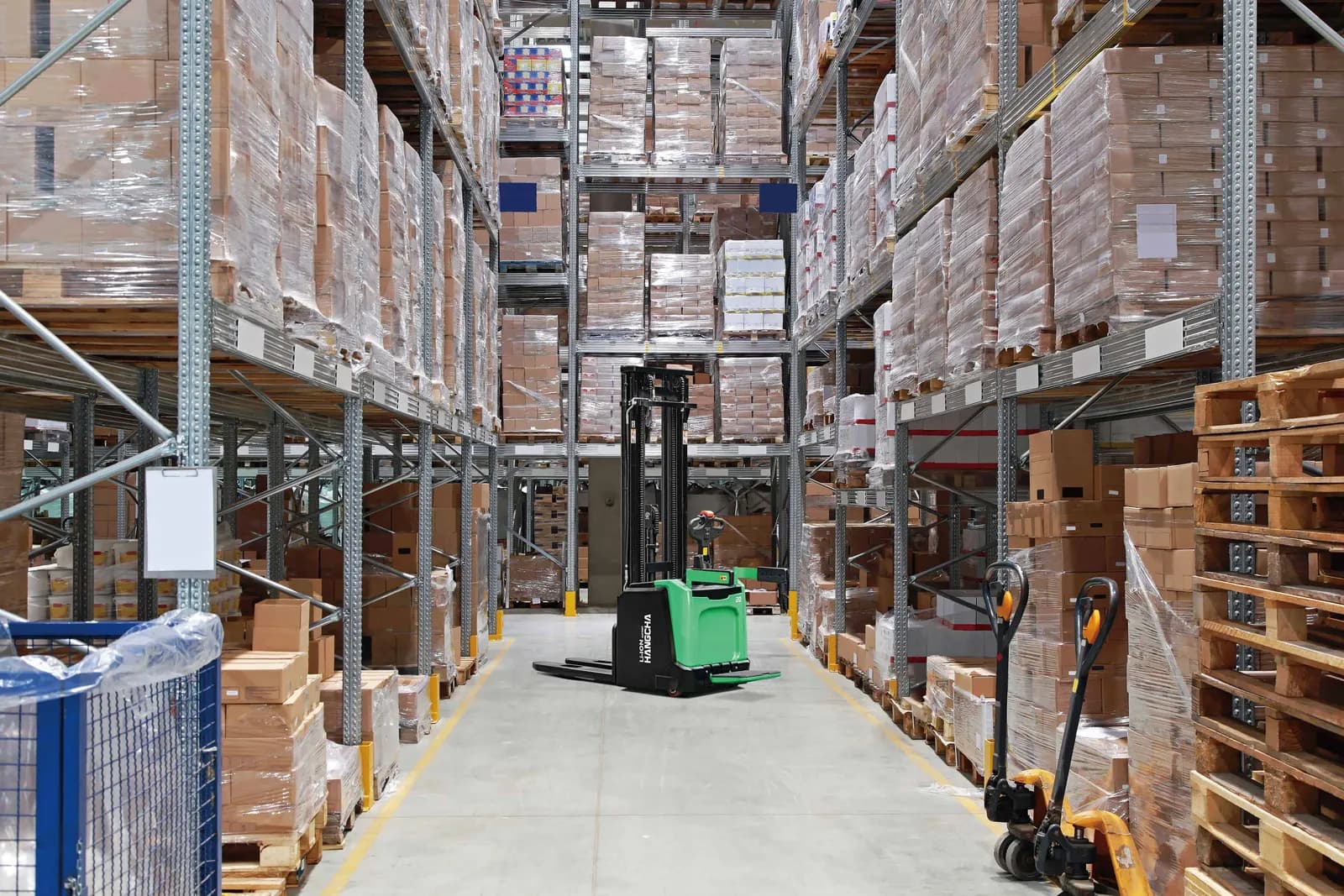
A small warehouse sets its own rules. Aisles are narrow, the turning radius is limited, and every square metre the machine occupies is a square metre lost to storage. The floor is usually a smooth indoor slab, sensitive to tires that leave marks. Loads are often moderate, light to medium pallets, and the racking tops out at a reasonable height. In that context, compactness and restraint matter more than raw power. The right machine is the one that does the job asked of it without cluttering or damaging the place.
The case for the stacker
The stacker ticks most of the boxes in a small space. Electric, compact, and light, it maneuvers in narrow aisles, turns tight, and parks in little room. Its non-marking tires protect an indoor slab, and its quiet operation suits a space that is in use or attached to a shop. Its purchase cost stays modest, and its maintenance is simple, provided you keep up with the machine's upkeep to protect its service life.
It is ideal for stacking indoors up to moderate heights and for measured flows: putting away receipts, replenishing shelves, storing in the back across a few levels. As long as loads stay reasonable and use stays indoors, the stacker does the job with no extra cost and no oversizing.
The case for the forklift
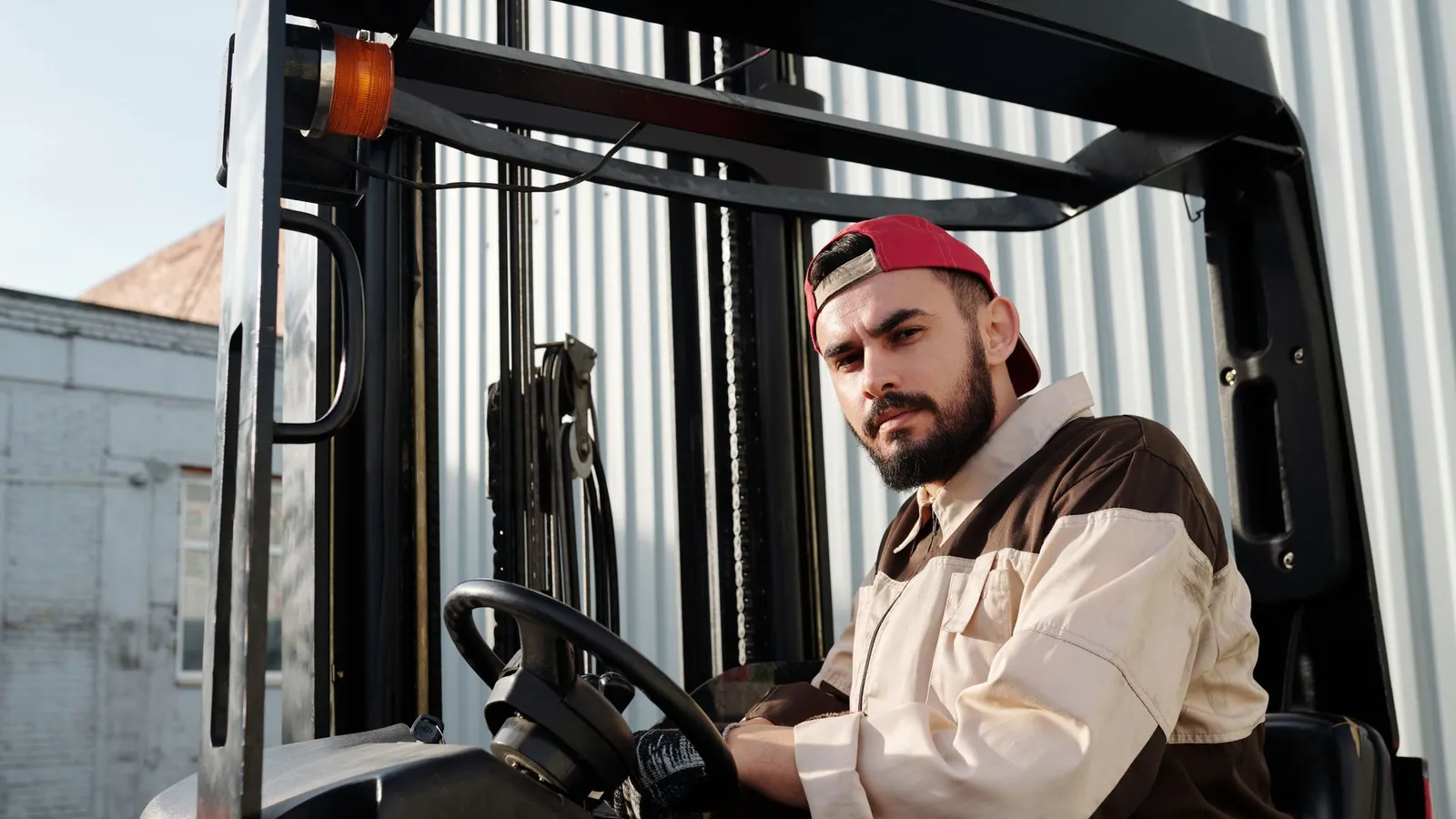
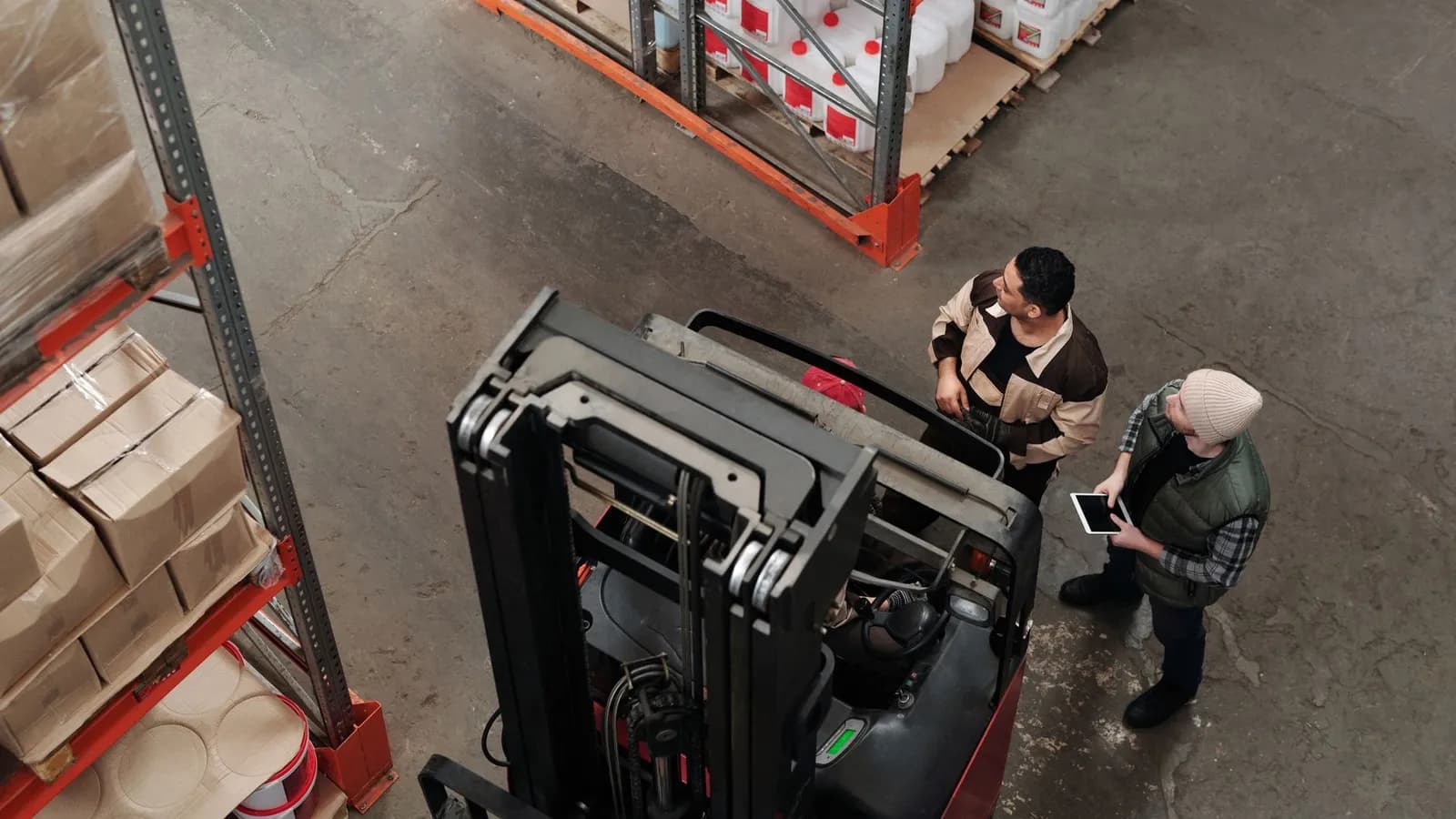
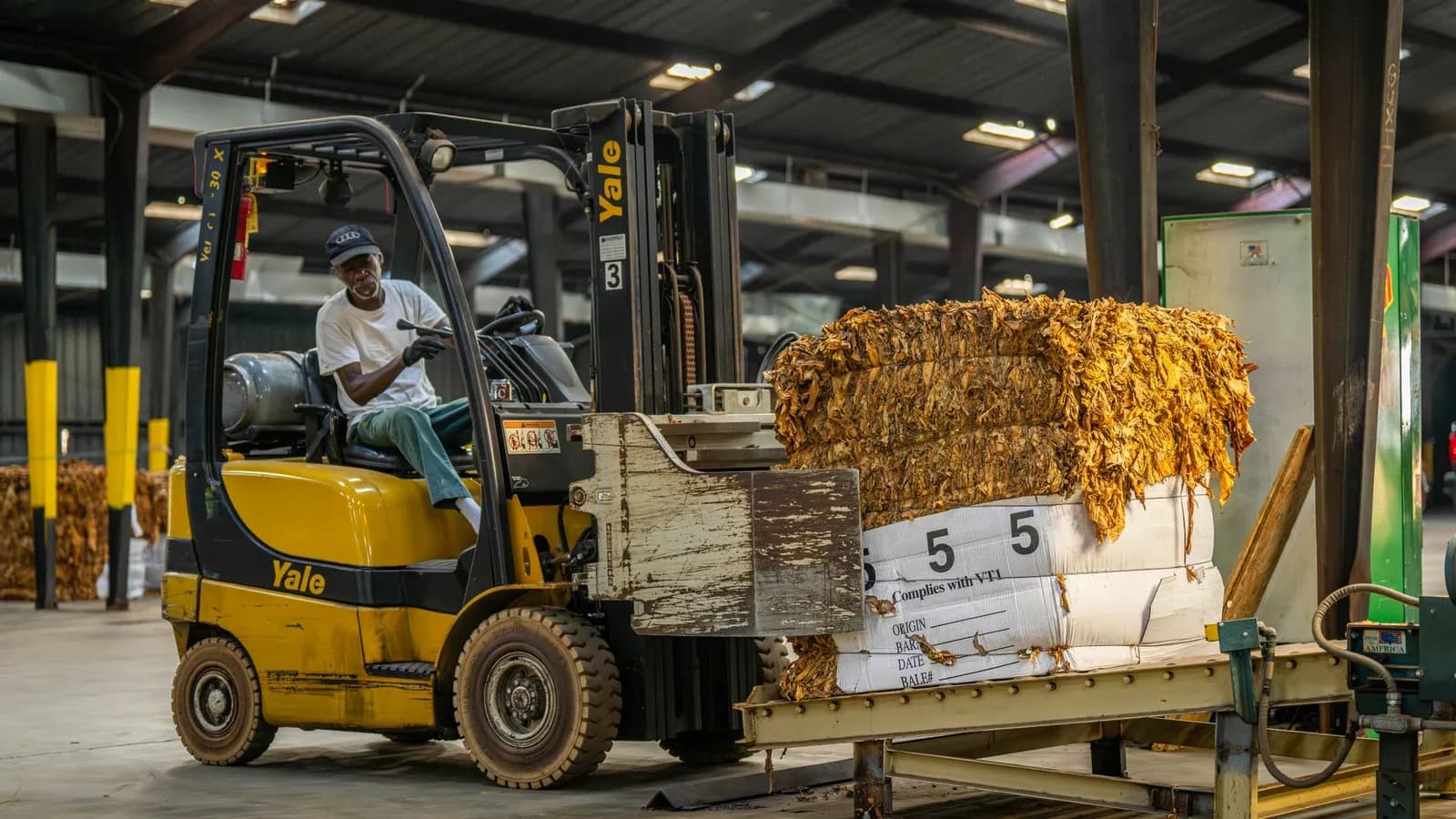
The forklift comes into play as soon as you leave the stacker's domain. It carries heavier loads, lifts higher, climbs ramps, and works outdoors as readily as in mixed conditions. Its sturdiness withstands intensive, continuous use. In return, it is bigger, heavier, more expensive, and needs more room to maneuver.
For a small warehouse, it becomes the right choice as soon as the work involves heavy pallets, a need to lift beyond what a stacker allows, trips out to an outdoor yard, or a steady pace that justifies a machine built to last. In short, the forklift answers the demands the stacker does not cover.
A quick decision framework
To decide without hesitation, reduce the choice to four concrete questions:
- Load weight: light to medium pallets, the stacker is enough; heavy loads, the forklift wins.
- Lift height: a few indoor levels, the stacker fits; real height, it is the forklift.
- Indoors or outdoors: strictly indoor use, stacker; yard, ramps, or mixed ground, forklift.
- Daily intensity: measured flow, stacker; sustained, continuous pace, forklift.
If your answers lean toward the stacker, there is no point overinvesting. If one of them clearly tips to the forklift, that is the signal for a more capable machine. To go further on choosing between the two stacker families, see electric or semi-electric stacker.
Combining both as needs dictate
Many small operations do not have to choose once and for all. They run an electric stacker day to day, for routine indoor stacking, and call on a rental forklift for the occasional job: a heavy delivery, an unload in the yard, a seasonal peak. This combination avoids tying up the capital and the floor space a forklift would demand if used only a few days a month, while keeping the ability to lift heavy or outdoors whenever the need arises. Further upstream, for simply moving pallets at floor level, the debate is rather between a manual or electric pallet truck, a trade-off that complements this one.
The right instinct, then, is not to aim for the most powerful machine, but for the one that matches your dominant use, topping up with our rental plans for the rest.
Frequently asked questions
Stacker or forklift for a small warehouse?
For strictly indoor use, light to medium pallets, and stacking across a few levels, the compact electric stacker is enough and keeps the space clear. The forklift becomes the right choice as soon as loads get heavy, you need to lift higher, head out to a yard, or hold a sustained pace.
Why does the stacker suit a small space so well?
Electric, compact, and light, it maneuvers in narrow aisles, turns tight, and parks in little room. Its non-marking tires protect an indoor slab and its quiet operation suits a space that is in use or attached to a shop.
When does the forklift become essential?
It becomes the right choice as soon as the work involves heavy pallets, a need to lift beyond what a stacker allows, trips out to an outdoor yard, or a steady pace that justifies a machine built to last.
Do you really have to choose between the two?
No. Many small operations run an electric stacker day to day and call on a rental forklift for the occasional job, which avoids tying up the capital and the floor space a forklift would demand if used only a few days a month.
Unsure which machine fits? See our stackers or request a free needs assessment.