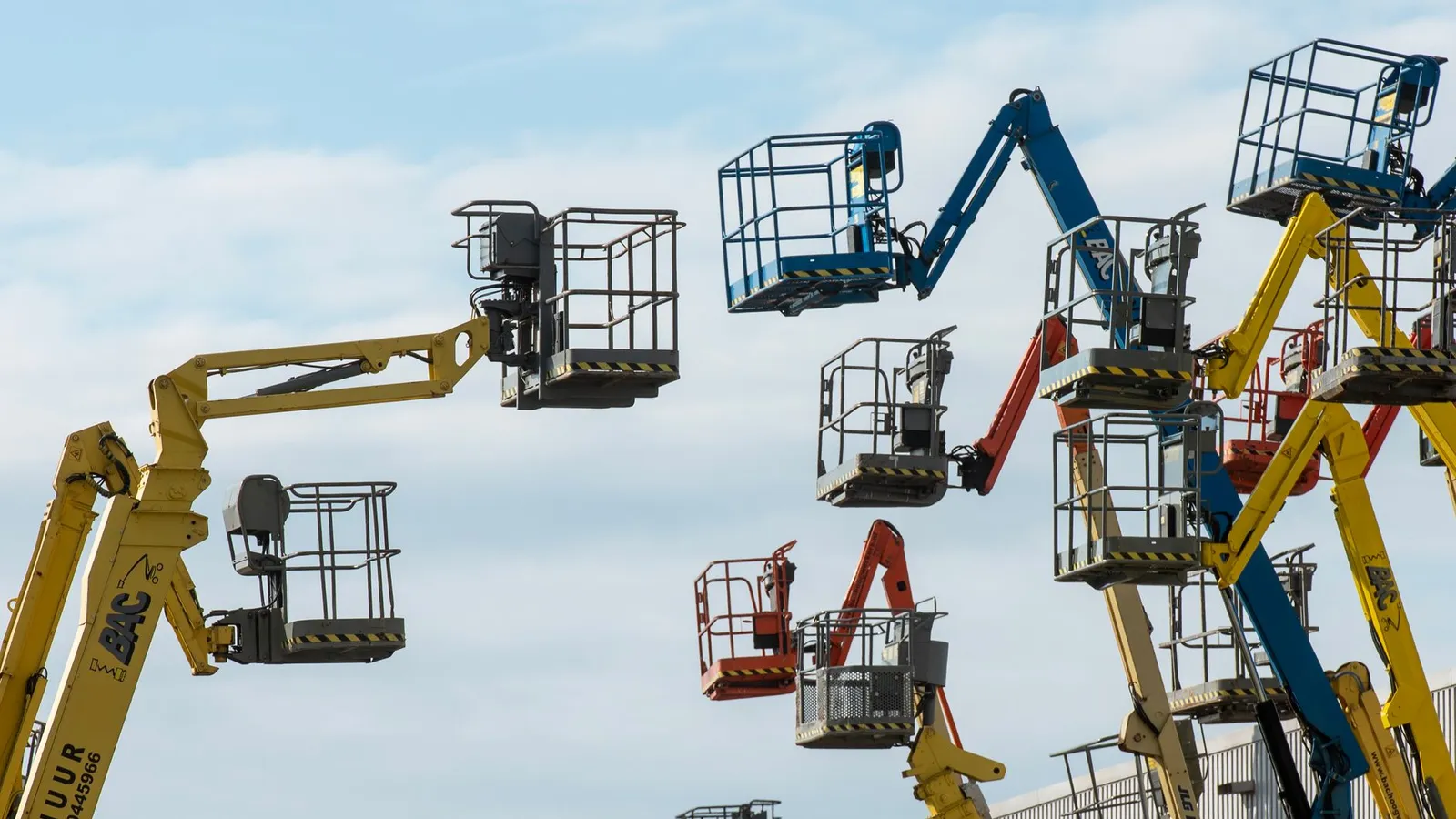
On a construction site or inside a warehouse, the aerial lift you pick shapes both crew safety and how much work gets done at height. A machine that comes up short forces improvisation; an oversized one clutters the work area, costs more, and complicates logistics. Before booking equipment, four questions frame the decision: how high do you actually need to work, do you need to reach over obstacles, is the job indoors or outdoors, and what condition is the ground in. This guide walks through the three main families of aerial lifts and the practical criteria that settle the choice.
In short: let the real working height, the need to clear obstacles, the environment (indoors or outdoors), and the ground condition decide the type of lift. A scissor lift to go straight up above the machine, an articulating boom to reach around an obstacle, a telescopic boom when height and outreach come first; electric indoors, diesel on rough site terrain. For a one-off need, renting gives you exactly the right machine without tying up capital.
Scissor, articulating, or telescopic: three geometries
Mobile elevating work platforms come in three main families, each with a different lifting geometry.
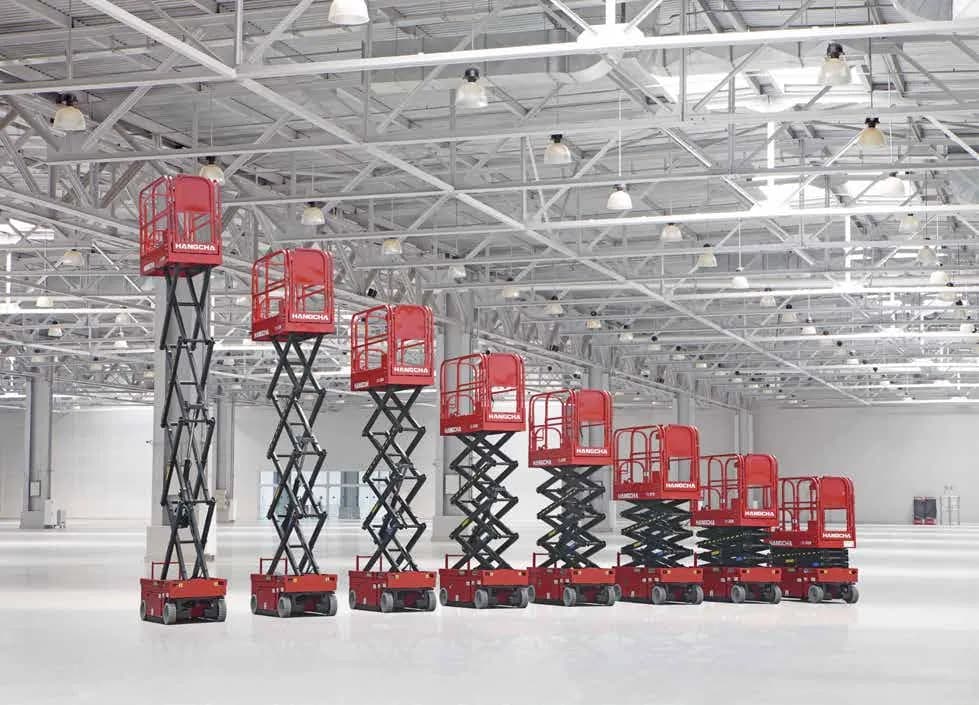
A scissor lift raises its platform straight up on a crisscross mechanism. It is the simplest option, and usually the most economical, whenever the work area sits directly above the machine. Its large deck, often with a sliding extension, carries two to four people plus tools and materials. It shines in building maintenance, suspended ceilings, electrical and HVAC work, and any facade task you can park beneath.
An articulating boom lift uses several hinged boom sections, often finished with a jib at the tip. Its purpose is to work around obstructions: reaching over a production line, clearing a low roof, getting at a facade behind a canopy. It is the machine of choice for congested environments, indoors or out.
A telescopic boom lift extends a single straight boom built for maximum height and reach. Fast setup, long horizontal outreach, and stability at full extension make it the default on construction sites, cladding work, steel erection, and tall outdoor jobs in general.
| Type | Movement | Typical heights | Key strength | | --- | --- | --- | --- | | Scissor | Vertical only | 8-18 m | Large deck, high payload | | Articulating | Up and over obstacles | 12-26 m | Outreach in tight, cluttered spaces | | Telescopic | Straight boom, maximum reach | 20-40 m and beyond | Height and long outreach |
Working height vs platform height
The most common booking mistake is about height. Spec sheets usually quote the working height, which is the platform floor height plus roughly two metres, the zone a standing operator can reach. A lift advertised at 12 m of working height therefore puts the platform floor at about 10 m. If the task itself sits at 12 m, say a cable tray under a roof, you should be looking at a 14 m working height.
Three more numbers deserve a check before you confirm the order:
- Horizontal outreach. Decisive whenever an obstacle stops you from parking the machine directly below the work area.
- Basket capacity, in kilograms, counting operators, tools, and materials. A 230 kg basket will not take two people plus a rotary hammer and a load of conduit.
- Stowed dimensions. Door clearance in width and height, lift or goods-hoist load limits, and turning radius in the aisles.
Measure on site rather than guessing from memory. A few minutes with a laser measure beats discovering on day one that you are two metres short.
Indoors or outdoors: power source and tires
The working environment dictates the powertrain. Indoors, electric is the obvious call: zero emissions, quiet enough to run alongside normal operations, and non-marking tires that protect resin or polished concrete floors. Compact models fit through standard doorways and maneuver in narrow aisles; we cover that specific case in our article on the electric aerial lift indoors.
Outdoors, on rough site terrain, diesel remains the reference: four-wheel drive, all-terrain tires, generous ground clearance, and slope compensation for uneven ground. Hybrid or dual-power machines are a sensible compromise on mixed jobs, for instance a building that is weathertight while the surroundings are still unpaved.
Also check what the machine is rated for. Many indoor lifts are simply not approved for outdoor use in wind, whatever their power source. Conversely, a heavy diesel unit indoors raises emissions and floor-loading problems. Verify the allowable load on the slab, especially over raised technical floors or suspended slabs.
Safety: essential operating rules
Even the right machine does not replace sound operating practice. The fundamentals are shared by every manufacturer and safety professional:
- Trained, authorized operators. Operating an aerial lift requires training matched to the machine category and a formal authorization from the employer. A scissor-trained operator is not automatically qualified on a telescopic boom.
- Harness in boom lifts. On articulating and telescopic booms, a full-body harness with a short lanyard clipped to the designated anchor point is the rule: the catapult effect of a sudden jolt can throw an unattached operator out of the basket.
- Check the ground first. Confirm bearing capacity, backfilled trenches, manholes, and slopes before positioning the machine, and use spreader plates where needed.
- Watch the wind. Stop work above the manufacturer's wind limit, especially when handling panels or anything else that catches the wind.
- Daily inspection. A visual and functional check before every shift: fluid levels, controls, emergency stop, emergency descent.
- Cordon off the ground area. Mark out the zone beneath the work, keep people from standing under it, and maintain safe distances from overhead power lines.
And never overload the basket, never add a ladder or any makeshift step inside it, and never climb out of the platform at height outside a specific, planned procedure.
Renting a lift for the duration of the project
Buying an aerial lift makes sense when it works year round. For a one-off project, a maintenance campaign, or a seasonal peak, renting is usually the more rational choice: you get exactly the machine the job calls for, height, outreach, and power source included, without tying up capital or carrying the maintenance, periodic inspections, and storage between uses. Rental also lets you switch equipment from one phase to the next: an electric scissor for fit-out, a diesel telescopic for the structural envelope. Once the model is settled, the next step is getting it on site: we walk through how to rent a lift and prepare the site step by step, and we handle aerial lift rental in Casablanca separately for the constraints specific to projects in the region. When you make the request, give the rental provider the real height you need to reach, the ground conditions, the access constraints, and the expected duration; those four details are usually enough to land on the right model the first time, and you can send them straight through our rental packages.
Frequently asked questions
Which type of aerial lift should I choose for my site?
Pick a scissor lift when the work area sits directly above the machine, an articulating boom to reach around an obstacle in a congested environment, and a telescopic boom when maximum height and outreach come first, for instance on cladding or steel erection work.
What is the difference between working height and platform height?
Working height is the platform floor height plus roughly two metres, the zone a standing operator can reach. A lift advertised at 12 m of working height therefore puts the platform floor at about 10 m; for a task at 12 m, look for a 14 m working height.
Should I choose an electric or a diesel lift?
Indoors, electric is the obvious call for its zero emissions, quiet running, and non-marking tires that protect the floors. Outdoors on rough site terrain, diesel remains the reference thanks to its four-wheel drive, all-terrain tires, and slope compensation.
Is it better to buy or rent an aerial lift?
Buying makes sense when the machine works year round. For a one-off project, a maintenance campaign, or a seasonal peak, renting gives you exactly the right machine without tying up capital or carrying the maintenance, periodic inspections, and storage between uses.
Need help choosing a lift? See our aerial work platforms, such as the GTHZ electric articulating boom lift, or request a free needs assessment.